Published August 14, 2026
How to Plan a Company Retreat in Bali
Plan a company retreat in Bali in four decisions, in this order: how many people are coming, how many nights they can be away, whether you need the whole property to yourselves, and what the days actually have to achieve. Book four to six months ahead. Settle the session room before you settle anything about the photographs.
This is written for the person organising the trip: an HR or People Ops lead, an executive assistant, or whoever in Finance and Ops ended up owning it at a distributed company. It is not about buying a seat at a retreat someone else runs. In Bali those are usually called business retreats and they are sold per person, which is a different product with a different price and a different reason to exist.
The short version
- Corporate offsites run on shorter notice than yoga and wellness retreats. Four to six months is the common advice, and six to nine for larger groups.
- Most offsites are shorter than people expect: about four and a half days including the travel at both ends.
- The session room needs to be at the accommodation. Almost every group books it that way, and splitting the two costs you half a day in transport every day.
- Exclusive use of the property is what separates an offsite from a holiday with meetings in it.
- More offsites are spoiled by the agenda than by the venue. The two named failure modes are wall-to-wall presentations and an over-packed schedule.
Table of Contents▼
How far ahead should you book?
Four to six months ahead for a team of up to about twenty, and six to nine months if the group is larger or the dates are fixed by something you cannot move. Surf Office, a company that organises offsites and therefore has an interest worth knowing about, surveyed 90 companies and reports that offsites under 100 people are typically confirmed around 17 weeks out, which is just under four months.
That is noticeably later than the retreats we usually host. Independent retreat organisers here book nine to twelve months ahead, because they have to fill the retreat themselves and need the dates on sale early. A company already has its people. That difference is useful to you: a corporate group can often take a week that an organiser could never have committed to in time, including weeks that open up inside the next six months. If your dates are already fixed, how far ahead to book a retreat venue sets out which parts of the calendar move fastest.
Who signs it off, and what do they need to see?
Usually not the person planning it. The planning tends to sit with HR, People Ops or an executive assistant, while the approval runs through a finance lead who was not in any of the conversations that led to the idea. That gap is where offsites stall.
What closes it is a document rather than enthusiasm: the dates, the headcount, what the week is meant to produce, what is included in the venue and what is not, and what the team will actually be doing on each day. PostHog, which publishes its own account of running company offsites, is unusually direct about the planning overhead being the real cost. Ask any venue you are considering for the day-by-day shape in writing, early, because it is the part an approver can read and the part you will otherwise be reconstructing from memory in a meeting.
What does the venue actually need to have?
A room your whole team can sit in, at the place they are sleeping. In the Surf Office survey, 98 percent of groups booked their meeting space at their own accommodation, and 51 percent of companies named finding the location and the venue as the hardest part of the whole exercise. Those two findings are the same finding: the search is hard because most properties are either a hotel with a conference suite and no privacy, or a beautiful house with nowhere to run a session.
| What to check | Why it decides the week | What that is at Basundari |
|---|---|---|
| A session room that seats everyone | If the working block cannot happen where you sleep, every day loses time to transport in both directions | A 65m2 shala with a projector, sound and high-speed internet |
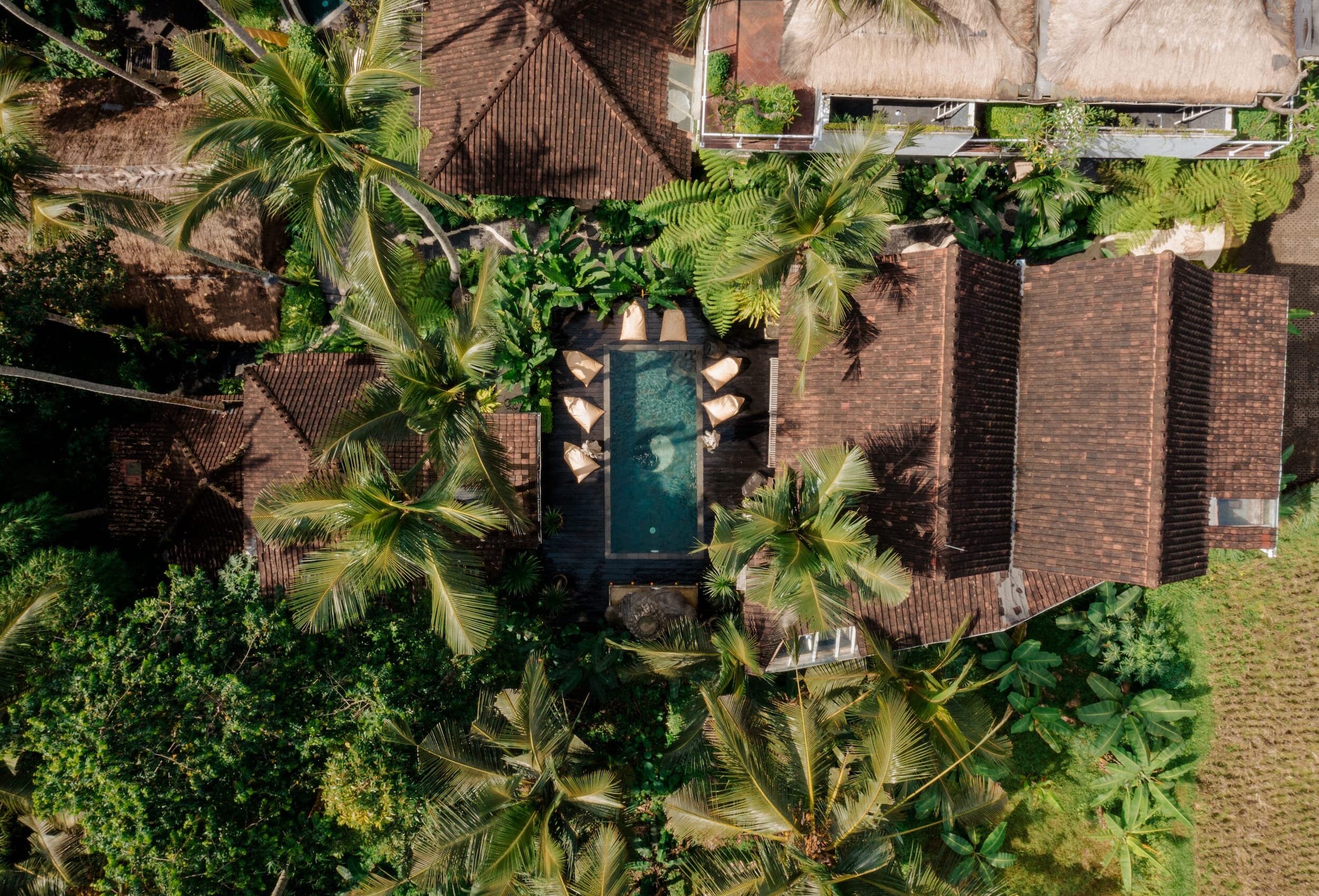
| Exclusive use of the property | Shared venues mean strangers in the pool during a conversation you did not want overheard | One company at a time, 11 rooms for up to 22 people |
| Food handled on site | Twenty people leaving for lunch is an hour gone, twice a day | Chefs who cook every meal on site, menus agreed with you before arrival, allergies and diets included |
| Somewhere real to recover | Recovery blocks are what stop the second day collapsing | Two pools, a sauna, an ice bath and quiet spots in the gardens |
| One contact who is on the property | Something always changes, and you should not be the person fixing it | The team runs food, rooms and logistics while you run the agenda |
Whole-property hire is worth pressing on specifically. Planners have been asking for exclusive use and non-urban settings since offsites came back after 2020, and it is the one thing you cannot add later. What that looks like here is set out on our corporate retreats page, and the property itself is on the venue page.
How many days should it be?
Three nights is the shape most teams land on once flights are taken into account, and the average offsite in the Surf Office data runs about four and a half days including travel. The length question deserves its own answer, because it is decided by arrival times and recovery rather than by how much you want to cover: how long should a team offsite be works through it, including what a fourth and fifth night actually buy you.
What goes wrong on a company retreat?
Two things, and neither is the venue. The first is the presentation marathon: day after day of one-way slides, which the SHRM Executive Network describes as the failure mode of executive retreats specifically. The second is over-packing, which is the mistake PostHog names in its own write-up after doing it.
Both are agenda problems, and both are cheaper to fix before you book than after. The practical test is whether your draft schedule has genuine gaps in it, in the afternoon, on purpose. A venue can help here or get in the way: if recovery means a taxi to somewhere else, it will not happen. What a venue handles versus what stays yours is covered in what a retreat venue handles, and it applies to an offsite as much as to a retreat.
What to send when you enquire
Headcount, the weeks you are considering, and one sentence about what the offsite has to achieve. That is enough for a venue to tell you whether it can hold the group and the dates, and it is enough for us to tell you whether we are the wrong answer, which happens and is better said early.
If it would help to have something to put in front of the person approving the budget, send us that brief and we will write the days back to you: what happens on each one, what is included, and where the working blocks and the recovery sit. It is the document most planners end up building themselves, and we would rather build it with you.
Basundari is the perfect setting to host your retreat. Whether you specialize in yoga, meditation, mindfulness, breathwork, wellness, dance, arts, leadership, massage, fitness, pilates, inspiration, healing, or personal development, Basundari is designed to support all types of retreats. Reach out to us, and we'll ensure your needs are met.
Plan the perfect retreat